
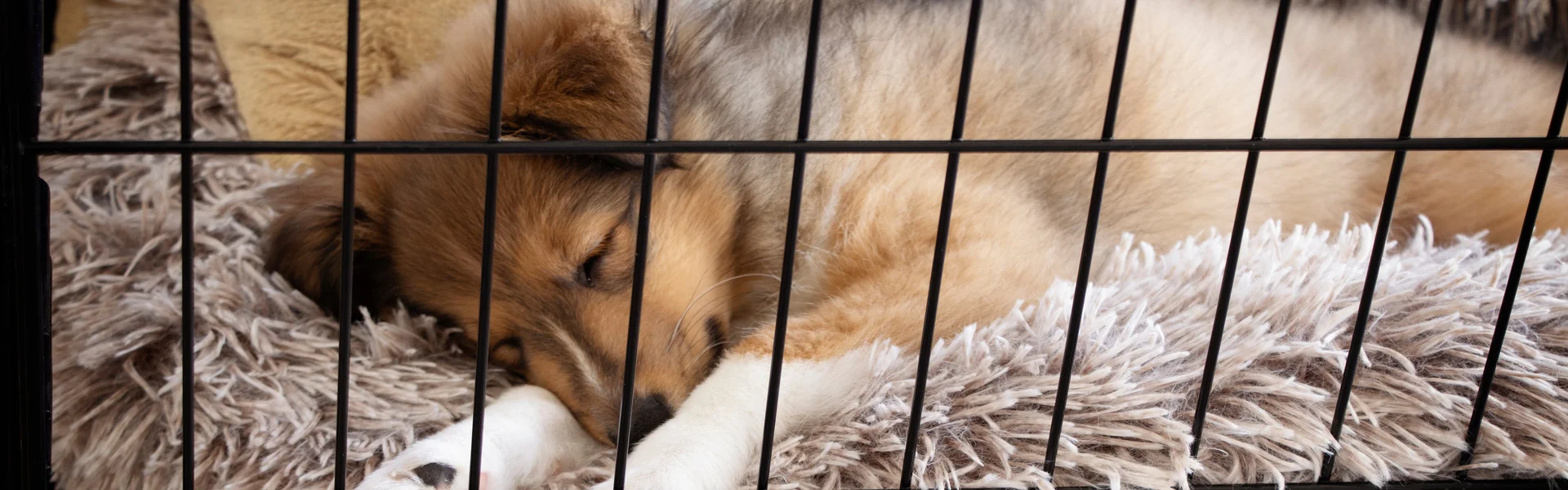
🐶 The Complete Guide to Crate Training Your Puppy
Easy, fun steps to help your pup love their crate — backed by science!
⚡ Quick Answer
Crate training teaches your puppy to see their crate as a cozy, safe hangout spot. With treats and positive vibes, most pups learn to love their crate in just 1-4 weeks! The golden rule: your puppy can stay in the crate for one hour per month of age, plus one more hour. So a 3-month-old puppy? About 4 hours max. Done right, crate training makes potty training way easier and keeps your pup safe when you can't watch them!
What Is Crate Training? (And Why Dogs Actually Like It!)
Here's the deal: crate training is teaching your puppy that their crate is their own special room. It's not a cage or a jail — it's more like a cozy bedroom where they can chill out, take naps, and feel safe.
Think about it this way. You know how you might have a favorite spot on the couch where you always sit? Or how kids love building blanket forts? Dogs have the same vibe! They naturally want a comfy, quiet place where they can relax when things get crazy.
🧠 Fun Fact!
Wild dogs and wolves create little dens to sleep in and raise their puppies. Your dog's great-great-great (keep going!) grandparents were doing this thousands of years ago. A crate is basically a ready-made den!
When you do crate training right, something cool happens. Your puppy starts choosing to go in their crate on their own. They'll head in there when they're tired, when there's too much noise, or when they just want some alone time. That's when you know you've nailed it!
At Off Leash K9 Training Boca Raton, we see puppies go from "no way am I going in there" to "this is my favorite spot" all the time. It just takes patience and the right approach.
Cool Science Stuff: Why Crate Training Works
Let's geek out for a minute! There's actual brain science behind why crate training works so well.
Your Puppy's Brain on Crate Training
Your puppy has two main "modes" in their brain:
- Fight or Flight Mode — when they feel scared or stressed
- Rest and Relax Mode — when they feel safe and calm
When you use treats and happy vibes during crate training, your puppy's brain starts connecting the crate with feeling good. Over time, just seeing their crate can trigger that calm, relaxed feeling. Pretty neat, right?
"Through careful, positive training, the crate becomes a trigger for relaxation. Through misuse, punishment, or force, it becomes a trigger for fear and anxiety."— Canine Behavior Research, 2024
This is exactly why we never, ever use the crate as punishment. One bad experience can undo weeks of good training!
The 2024 Study: What Scientists Found
Researchers studied thousands of dog owners to see how crate training affects dogs. Here's what they discovered:
- Dogs crated for training purposes (like potty training) showed barely any stress
- Dogs crated with positive associations were happy and calm
- Crate training works best when dogs have some control over going in and out
- Using the crate for too long or as punishment caused problems
"Crating can serve educational purposes with minimal welfare impact when used appropriately."— Applied Animal Behaviour Science, 2024
Bottom line? Science says crate training is totally fine — great, even! — as long as you do it the right way. And that's exactly what we're going to teach you!
7 Awesome Benefits of Crate Training
Crate training isn't just about having a place to put your puppy. It makes your whole life (and your pup's life!) way easier. Here's how:
1. Potty Training Becomes SO Much Easier 🎉
Puppies don't want to go potty where they sleep. It's built into their brains! When your puppy is in a properly-sized crate, they'll hold it until you let them out. Then you take them straight outside, they go potty, you celebrate — and boom! They're learning that outside is the bathroom.
2. Keeps Your Puppy Safe 🛡️
Puppies are basically furry toddlers who put EVERYTHING in their mouths. Electrical cords, shoes, that weird thing under the couch... When you can't watch them, the crate keeps them safe from dangerous stuff.
3. Traveling Gets Way Less Stressful ✈️
A crate-trained dog travels like a pro! Whether you're going on a road trip or flying somewhere, your pup has their familiar cozy spot with them. No freaking out, just chilling.
4. Vet Visits Are Less Scary 🏥
Sometimes dogs need to stay at the vet overnight or recover from surgery in a crate. If your dog already loves crates, this is no big deal instead of terrifying.
5. Your Pup Gets Their Own Chill Space 😌
Everyone needs alone time sometimes — dogs included! When there's a party at your house or the kids are being loud, your dog has a quiet spot to escape to.
6. Say Goodbye to Chewed-Up Furniture 🛋️
Puppies who are crated during their chewing phase never learn that furniture is for chomping. By the time they earn house freedom, they've never developed the habit!
7. Sets You Up for More Training Success 🌟
Crate training teaches patience, impulse control, and settling down — skills that help with ALL other training. It's like the foundation for everything else! That's why we start with it at our obedience training programs in Boca Raton.
Picking the Perfect Crate
Not all crates are created equal! Getting the right one makes a huge difference.
Size Matters!
Your puppy's crate should be:
- Tall enough for them to stand without bonking their head
- Long enough to stretch out completely when lying down
- Wide enough to turn around in a full circle
- Not TOO big — or they might potty in one corner and sleep in another (gross!)
💡 Pro Tip!
Got a growing puppy? Buy a crate sized for their adult weight and use a divider to make it smaller now. As they grow, just move the divider. One crate, problem solved!
Types of Crates
| Crate Type | Best For | Good to Know |
|---|---|---|
| Wire Crates | Home use, pups who like to see around | Good airflow, can add a cover for a den feel, folds flat |
| Plastic Crates | Travel, airlines, pups who like more privacy | More enclosed and cozy, many are airline approved |
| Soft-Sided Crates | Travel with older trained dogs | NOT for puppies who might chew through them! |
| Heavy-Duty Crates | Escape artists, dogs with severe anxiety | More expensive, usually only needed for special situations |
Where to Put the Crate
- In a room where your family hangs out (puppies are social!)
- Away from direct sunlight, heaters, and cold drafts
- In your bedroom at night (at first) so your pup feels secure
- In a calm corner, but not totally isolated
Step-by-Step: How to Crate Train Your Puppy
Ready to do this? Here's exactly how to crate train your puppy the right way. Don't rush these steps — going slow actually gets you there faster!
Make Friends with the Crate (Days 1-3)
Put the crate in a common area with the door wide open (or removed). Make it comfy with a blanket inside. Now just let your puppy check it out on their own. Drop some treats near the crate, then just inside, then further back. When your puppy goes in, say "good!" in a happy voice. If they're nervous, that's okay — just give them time.
Goal: Your puppy walks into the crate by themselves to grab treats.
Mealtime Magic (Days 3-7)
Start feeding your puppy their meals inside the crate. Put the food bowl toward the back so they have to fully go in to eat. Keep the door open at first! As they get comfortable, you can start gently closing the door while they eat. Open it before they finish and get worried.
Goal: Your puppy gets excited to go in the crate at mealtime.
Close the Door (Just a Little!) — Week 2
Now try closing the door for short times when your puppy is calm inside. Start with literally 1-2 minutes while you sit right next to the crate. Give treats through the bars. If your puppy stays chill, slowly add more time. Always open the door BEFORE your puppy starts freaking out.
Goal: Your puppy stays relaxed for 5-10 minutes with the door closed while you're nearby.
Build Up Time and Distance — Weeks 2-3
Now start making crate time longer AND leaving the room. Give your puppy a yummy treat (like a stuffed Kong) and walk away for 30 seconds. Come back. Then try 1 minute. Then 5 minutes. Mix it up — don't always make it longer, or your puppy will figure out the pattern!
Goal: Your puppy chills in the crate for 30+ minutes while you're in another room.
Practice Actual Leaving — Weeks 3-4
Time for the real deal! Crate your puppy about 5-10 minutes before you leave. Give them a special crate-only treat. Then just... leave. No big dramatic goodbye! Keep it chill. When you come back, keep it chill too — no huge celebrations.
Goal: Your puppy stays calm when you actually leave the house.
Keep It Going! — Ongoing
Keep using the crate as part of normal daily life. Nap time? Crate. Bedtime? Crate. When you can't supervise? Crate. Always make going in the crate a positive thing with treats and praise. Eventually, your puppy will start going in on their own!
Goal: Your puppy sees the crate as their happy place and chooses to hang out there.
⚠️ Super Important!
NEVER EVER use the crate as punishment! If your puppy has an accident or does something bad, don't send them to the crate as a consequence. This will ruin all your hard work and make them scared of their crate.
Need help with crate training or any other puppy challenges? Our puppy training program covers everything from crate training to basic commands. We also offer board and train if you want us to do the heavy lifting!
Crate Time Schedule (By Your Puppy's Age)
Puppies have tiny bladders! They physically can't hold it as long as adult dogs. Here's how long your puppy can stay in the crate based on their age:
🎯 The Golden Rule
Your puppy's age in months + 1 hour = maximum crate time during the day. So a 2-month-old puppy? 3 hours max. A 4-month-old? 5 hours max. Easy!
| Puppy Age | Max Daytime Crate Time | Nighttime (with potty breaks) |
|---|---|---|
| 8-10 weeks | 30-60 minutes | Every 2-3 hours needs a break |
| 11-14 weeks | 1-3 hours | Every 3-4 hours needs a break |
| 15-16 weeks | 3-4 hours | Every 4-5 hours needs a break |
| 4+ months | 4-5 hours (max!) | Most can sleep 5-6 hours |
| 6+ months | 4-5 hours (max!) | Usually can sleep through the night! |
| Adult dogs | 4-5 hours (max!) | 6-8 hours is fine |
Sample Day for a 10-Week-Old Puppy
| Time | What's Happening |
|---|---|
| 6:30 AM | Wake up → IMMEDIATELY outside to potty! |
| 6:45 AM | Breakfast in crate → outside again |
| 7:15 AM | Playtime and exploring (supervised!) |
| 8:00 AM | Potty break → crate nap (30-45 min) |
| 8:45 AM | Wake up → potty → supervised play |
| 10:00 AM | Potty → another crate nap |
| 11:00 AM | Wake → potty → training session → play |
| 12:00 PM | Lunch in crate → potty → crate nap |
| ...Continue this pattern all afternoon... | |
| 9:00 PM | Last potty break → bedtime in crate |
Yeah, it's a lot of potty breaks! But it gets way easier as your puppy grows. Hang in there!
Crate Training at Night 🌙
Nighttime crating can feel like the hardest part. Here's how to make it easier on both of you!
Setting Up for Sleep Success
- Location: Put the crate in YOUR bedroom at first — hearing you breathe helps your puppy feel safe
- Before bed: Take away water about 2 hours before bedtime and potty right before crate time
- Tire them out: A sleepy puppy sleeps better! Play or walk before bed
- Make it cozy: Add a safe chew toy and a blanket that smells like you
When Your Puppy Wakes Up Crying
Young puppies CAN'T hold it all night. When your puppy cries:
- Wait 30 seconds to see if they settle themselves
- If the crying continues, take them straight outside for potty
- Keep it BORING — no play, quiet voice, dim lights
- Right back in the crate after they go
- As they get older, they'll naturally go longer between breaks
🌟 The First Night Reality Check
The first few nights are rough. Your puppy just left their mom and brothers and sisters — they've never slept alone before! Some whining is totally normal. Stay strong, keep things calm, and don't give in and let them in your bed (unless you want that forever!).
When Will My Puppy Sleep Through the Night?
Most puppies can make it 6-8 hours without a potty break by around 4-5 months old. Some take a bit longer, especially small breeds with tiny bladders. Be patient!
Oops! Common Mistakes to Avoid
Even awesome puppy parents mess up sometimes. Here are the biggest mistakes to dodge:
✅ DO This
- Introduce the crate slowly over days
- Make it super cozy and inviting
- Use lots of treats and happy vibes
- Follow the time limits for your pup's age
- Keep hellos and goodbyes low-key
- Make sure your pup gets enough exercise
- Take them outside RIGHT after crate time
- Clean accidents with enzyme cleaner
❌ DON'T Do This
- Force your puppy into the crate
- Use the crate as punishment
- Leave your puppy crated too long
- Make a huge deal when leaving or coming home
- Let puppy out while they're crying
- Use the crate as your ONLY management tool
- Leave food and water in for long periods
- Ignore signs of real panic or distress
The #1 Biggest Mistake: Using the Crate as Punishment
We can't say this enough! If your puppy does something bad, don't send them to the crate as a time-out. This teaches them: crate = bad place = scary. All your positive training goes down the drain.
The #2 Biggest Mistake: Going Too Fast
Rushing crate training almost always backfires. If your puppy starts hating the crate, you have to go back to square one — and it takes even longer to fix! Slow and steady wins this race every time.
Help! My Puppy Won't Stop Crying 😭
Don't worry — this is super common! Let's figure out what's going on and fix it.
Why Is My Puppy Crying in the Crate?
- They need to potty — Take them out! This is the one time you SHOULD let them out when crying
- You went too fast — Go back a step in training and take it slower
- They want attention — Wait for a quiet moment, then open the door
- Not enough exercise — Burn off more energy before crate time
- They're bored — Add a stuffed Kong or safe chew toy
The key rule: Don't let your puppy out while they're actively crying (unless it's a potty emergency). This teaches them that crying = freedom. Instead, wait for even 2 seconds of quiet, then immediately open the door. They'll learn that quiet behavior is what works!
My Puppy Won't Even Go Near the Crate
Some pups are just more nervous. Try these tricks:
- Take the door completely off for a while
- Use super high-value treats (real chicken, cheese, hot dog pieces)
- Feed ALL meals inside the crate
- Play crate games — toss treats in, let them grab and leave, repeat
- Put a worn t-shirt of yours inside for comfort
- Be patient — some puppies need weeks of door-open time first
My Puppy Has Accidents in the Crate
This usually means one of these things:
- Crate is too big — Use a divider to make it smaller
- Too much time in the crate — Shorten the duration and add more potty breaks
- Medical problem — Get your vet to check for a UTI or tummy issues
- Bad history — Puppies from pet stores or puppy mills sometimes learned to soil their space (this takes extra patience!)
⚠️ When to Get Professional Help
If your puppy shows signs of serious panic — drooling a ton, hurting themselves trying to escape, losing bladder control from fear, or getting WORSE over time — talk to a professional trainer or vet behaviorist. These could be signs of separation anxiety, which needs special help.
Dealing with a really tough case? Our team at Off Leash K9 Training can help! We also specialize in dogs with behavior problems and can create a custom plan for your pup.
Your Questions Answered 🙋
🎯 Key Takeaways: Crate Training Success!
- Start early and go slowly — rushing makes it take longer!
- Always use treats and positive vibes — never force or punish
- Follow the age rule — months + 1 hour = max crate time
- Make the crate amazing — special treats, comfy bedding, favorite toys
- Be consistent — same routine, same positive approach, every day
- NEVER use the crate as punishment — this is the #1 rule!
- Exercise your puppy — tired puppies crate better
- Be patient with setbacks — they're normal, just go back a step
🐾 Explore Our Training Programs
📍 Serving Boca Raton & Surrounding Areas
We offer in-home training throughout South Florida!
🐕 Need Help with Crate Training?
Our certified trainers make crate training easy! We use positive, science-based methods that actually work. Whether you need a little guidance or want us to do the training for you, we've got you covered.
Off Leash K9 Training Boca Raton
The Top Dog Trainers in Boca Raton Florida
📚 Sources & Scientific References
- Applied Animal Behaviour Science. (2024). "The cage as an educational and therapeutic tool for dogs."
- American Veterinary Society of Animal Behavior. (2021). "Position Statement on Humane Dog Training."
- UC Davis School of Veterinary Medicine. "Crate Training Your Puppy."
- The Humane Society. "Crate Training 101."
- American Kennel Club. "Why Crate Training Is Great for Your Dog."
Written by Off Leash K9 Training Boca Raton
Our team of certified professional dog trainers has helped thousands of dogs and their families in South Florida. We believe in positive, science-based methods that create lasting results. Learn more about us →